ترك رسالة
إذا كنت مهتمًا بمنتجاتنا وترغب في معرفة المزيد من التفاصيل، فيرجى ترك رسالة هنا، وسنرد عليك في أقرب وقت ممكن.

When specifying exterior cladding, WPC wall cladding, aluminum composite, and PVC cladding are the three most common contenders. PVC attracts budget-conscious buyers with low upfront pricing. Aluminum dominates high-end commercial facades with fire credentials and a metallic finish. WPC attempts to balance a timber look with weather resistance and mid-range cost. But the real gaps go far beyond the quote sheet.
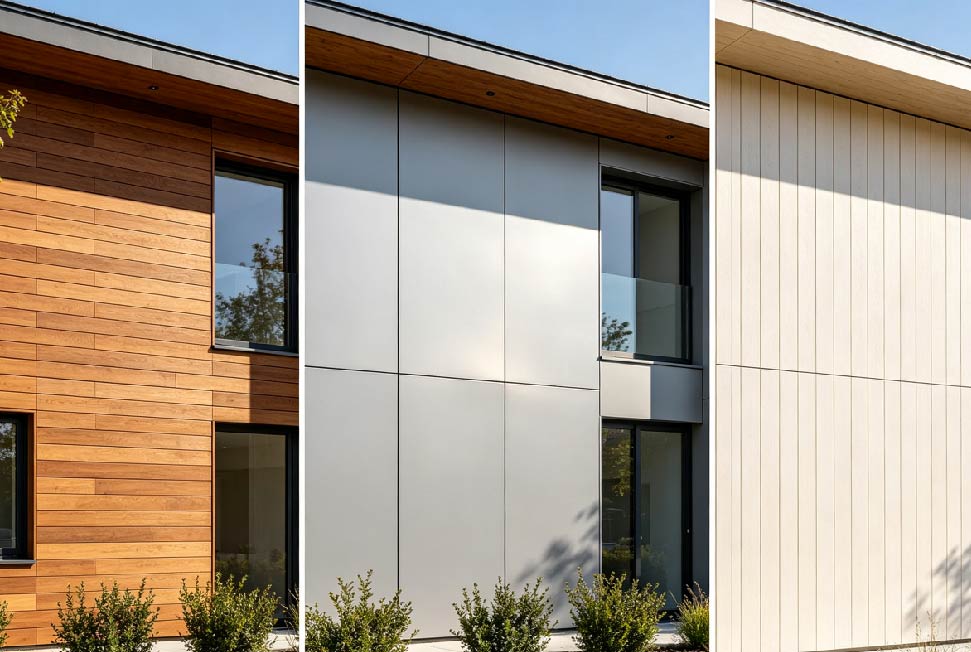
Fire Performance: Aluminum Leads, PVC is the Weak Link
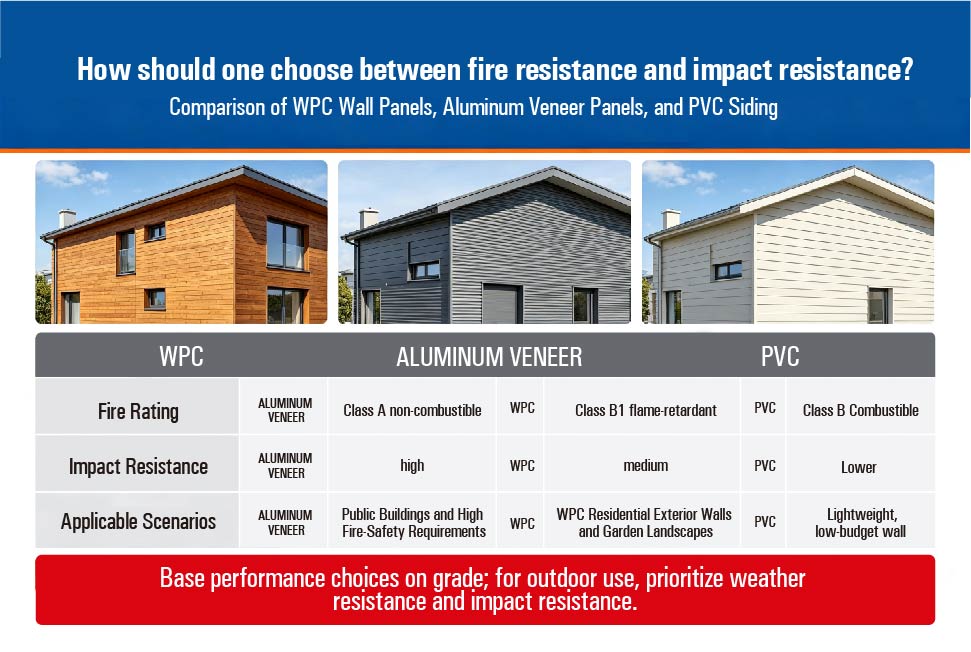
Aluminum composite panels can achieve A2-s1,d0 non-combustible classification, making them the go-to for high-rise and fire-restricted zones. Standard PVC cladding typically lands around D-s2,d0, which restricts its use on taller buildings. WPC can reach B-s3,d0, and some specially formulated co-extrusion grades pass ASTM E84 Class A, but it remains a combustible material—it cannot match aluminum's A-grade non-combustibility.
Weathering & Impact: WPC Balances, PVC is Brittle, Aluminum Dents
PVC cladding's biggest weakness is cold-weather brittleness—foamed PVC panels crack rather than dent under impact in low temperatures. Aluminum is structurally strong, but once dented, repair is nearly impossible and often requires full panel replacement. WPC wall cladding carries genuine mechanical strength from its wood fiber content and resists point impacts without fracturing. Co-extruded WPC achieves water absorption below 1% and UV fade resistance via its polymer shell. One trade-off: WPC is heavier than aluminum (12–18 kg/m² vs. 5–8 kg/m²), requiring more attention to wall load and subframe design.
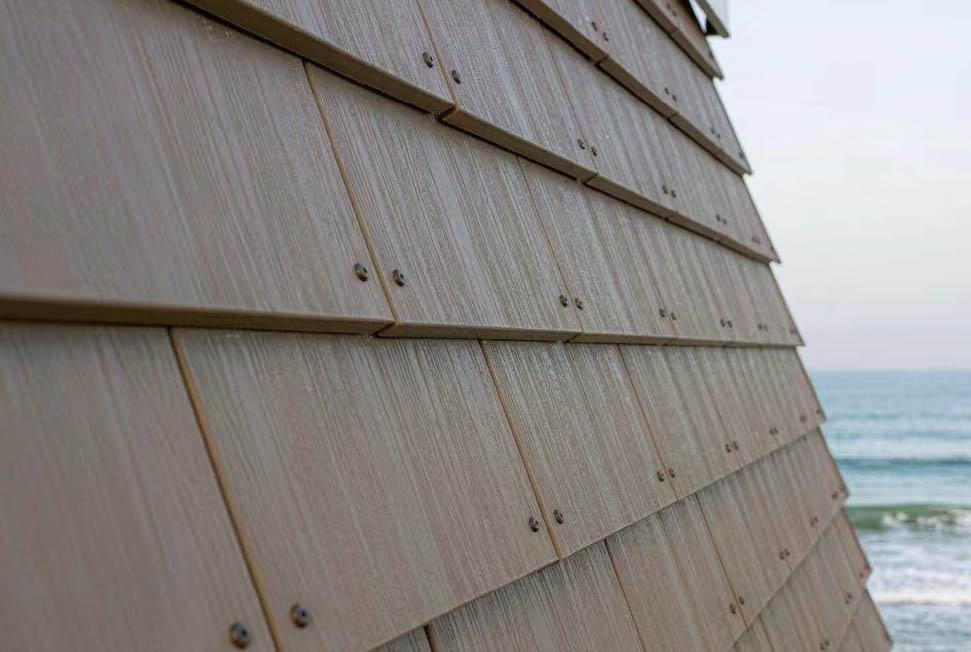
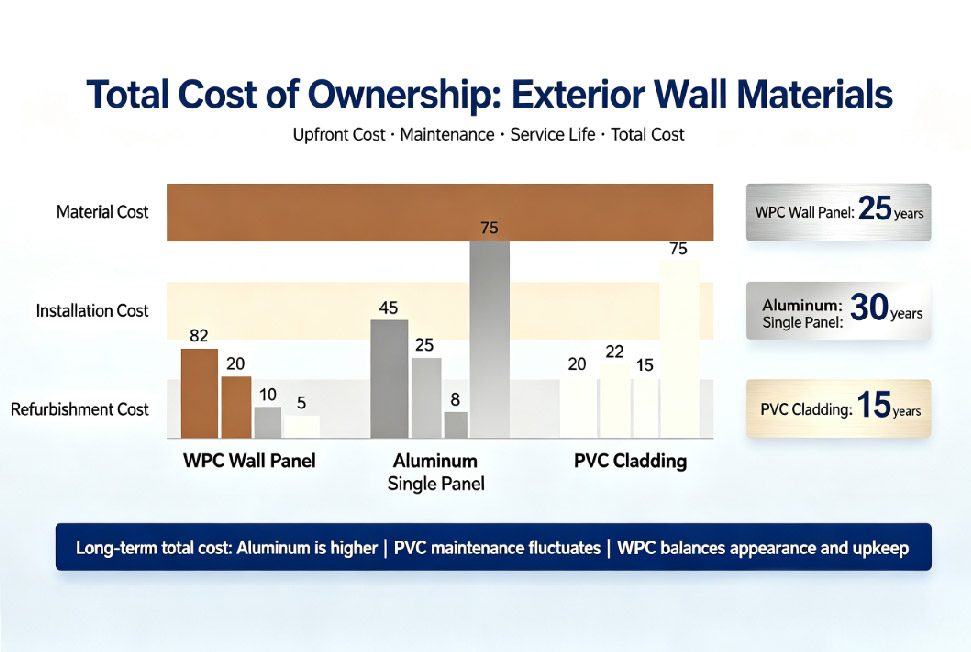
Whole-Life Cost: PVC is Cheap to Buy, Expensive to Own; Aluminum is Expensive Upfront; WPC Sits in the Middle
PVC cladding has the lowest initial price (FOB China roughly $4–$9/m²), but service life is typically 15–20 years, and once it fades, there is no refinishing option. Installed aluminum facades can reach $40–$55 per square foot, but deliver 30–50 years with virtually no maintenance. WPC wall cladding lands in the $8–$18/m² FOB band with a 20–30 year service life, requiring only annual rinsing—no painting, no sealing. For projects that want a timber aesthetic without the upkeep of real wood, WPC is the pragmatic middle ground.
Conclusion:
Choose aluminum for high-rise fire compliance. Choose PVC for ultra-budget temporary structures. Choose co-extrusion WPC for residential facades, resorts, and commercial walls that need a timber look with balanced cost and weather resistance. There is no universally "best" material—only the best fit for the project.


